Nyeri, Aga Khan University Partner to Expand Community Mental Health Services
Nyeri County and Aga Khan University have signed a five-year deal to train community members, strengthen suicide prevention and use local research to improve mental health services.
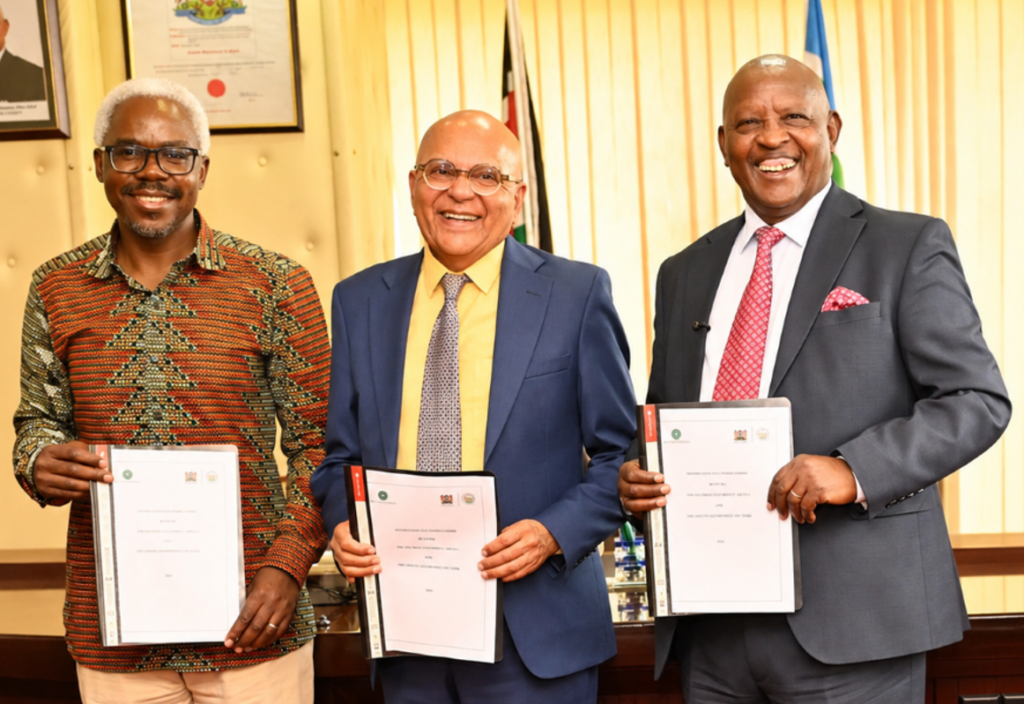
From left: Aga Khan University Brain and Mind Institute Deputy Director Prof. Lukoye Atwoli, Founding Director Prof. Zul Merali &, Governor of Nyeri County H.E. Dr. Mutahi Kahiga, during the signing of a five-year Memorandum of Understanding between Aga Khan University and Nyeri County to advance community mental health through research and education.
The County Government of Nyeri and Aga Khan University have entered into a five-year partnership to strengthen mental health services through community-based interventions, research and training, with a focus on suicide prevention, dementia and early identification of mental health needs.
The agreement, formalised through a Memorandum of Understanding signed on Wednesday, November 18, 2026, will bring together the university’s Brain and Mind Institute and Nyeri’s healthcare structures to improve prevention, referrals and access to appropriate care.
The partnership seeks to move mental health support beyond hospitals by equipping community health promoters, teachers, county staff, faith leaders and other community members with skills to recognise signs of distress and connect people to professional help.
Nyeri to establish mental health Living Lab
A central component of the agreement is the proposed Nyeri Living Lab, which will bring researchers, county health teams and residents together to identify local mental health challenges, test interventions and generate evidence to guide health planning.
The initiative is intended to help the county assess which approaches work in its own communities rather than relying solely on interventions developed elsewhere.
Speaking during the signing ceremony, Aga Khan University Brain and Mind Institute Founding Director Prof Zul Merali said research should translate into practical interventions that improve people’s lives.
“What makes this partnership particularly important is the County Government of Nyeri’s forward-thinking commitment to making mental health a priority. By working together, we can take research into communities, understand their needs and develop solutions that respond to the realities people face,” Merali said.
Nyeri Governor Dr Mutahi Kahiga said the county was keen to find sustainable and locally relevant responses to mental health challenges affecting residents. He said research would help guide county decisions and ensure interventions address the needs of communities.
Community members to receive mental health first-response training
Under the partnership, Mental Health First Response training will target county employees, teachers, faith leaders and other community members. Community Health Promoters will also receive additional training to help them identify possible mental health concerns early and refer affected individuals to appropriate services.
The approach recognises that people experiencing mental health difficulties may first seek help from relatives, neighbours, teachers or faith leaders instead of visiting a health facility. Training these trusted community contacts is expected to improve early recognition and reduce delays in accessing care.
The programme will address mental health across different stages of life, with priorities including suicide prevention, healthy ageing and dementia, as well as social and environmental factors that affect brain health and wellbeing.
Prof Lukoye Atwoli, Deputy Director of the Brain and Mind Institute and Dean of the Medical College, East Africa, at Aga Khan University, said effective responses require prevention, early identification and timely intervention alongside treatment.
“Addressing mental health issues requires an integrated approach that goes beyond treating illness to prioritising prevention, early identification and timely intervention,” Atwoli said.
He said the partnership would provide an opportunity to use research to strengthen community-based interventions and help the health system respond to people’s needs at every stage of life.
Research to inform county health planning
The two institutions will work together to understand local needs, evaluate interventions and strengthen the use of evidence in health planning and policy development.
By linking academic research with county service delivery, the partnership is expected to support the design of interventions that can be assessed and adapted to Nyeri’s circumstances.
The five-year arrangement places community participation and locally generated evidence at the centre of the county’s efforts to improve mental health and brain health services.