Safaricom Sued for KSh305 Billion Over Fuliza Service
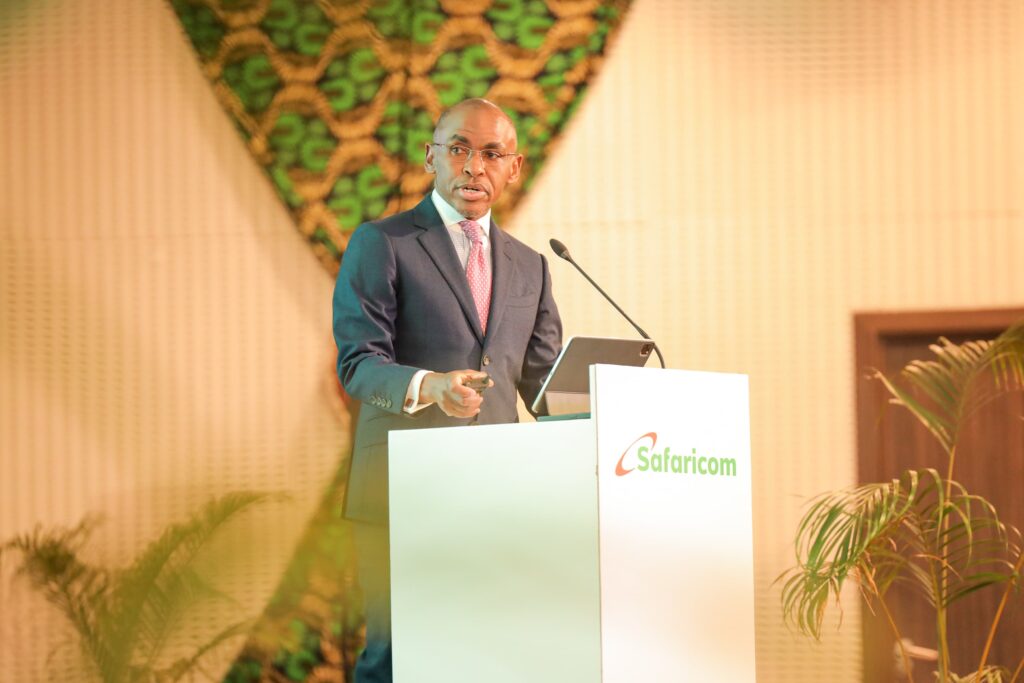
Safaricom CEO Peter Ndegwa. [Photo/Courtesy]
Safaricom PLC is facing a KSh305 billion lawsuit filed by three M-Pesa users who claim the telecommunications giant’s Fuliza overdraft facility operates unlawfully and exploits funds belonging to non-borrowing customers.
The case, filed against Safaricom, Vodafone Group, the Central Bank of Kenya (CBK), and the Communications Authority of Kenya (CA), alleges that the mobile money service provider has engaged in unauthorized banking activities while operating outside the framework of Kenya’s Banking Act.
The petitioners – Gichuki Waigwa, Lucy Nzola and Godfrey Okutoyi – are seeking KSh305 billion in damages, accusing the defendants of fraudulent misrepresentation, material non-disclosure of facts, unlawful investment of M-Pesa customers’ funds, predatory lending practices and charging excessive interest rates through the Fuliza platform.
At the heart of the dispute is Fuliza, the overdraft facility launched by Safaricom in partnership with banking institutions, which allows M-Pesa users to complete transactions even when they lack sufficient funds in their mobile wallets.
The petitioners argue that Safaricom is effectively conducting banking and financial business without being licensed as a bank or financial institution under Kenyan law. They further claim that funds held in M-Pesa accounts belonging to customers who do not borrow through Fuliza are being utilized in ways that have not been adequately disclosed to users.
The lawsuit also challenges the regulatory oversight of the service, with the plaintiffs questioning the role played by both the Central Bank of Kenya and the Communications Authority in approving and supervising the platform.
The legal action adds to a growing list of court battles involving Safaricom’s flagship M-Pesa platform, which remains one of Africa’s most successful mobile money services and processes billions of shillings in transactions daily.
The case comes at a time when scrutiny of digital financial services is increasing, with regulators, consumer groups and courts paying closer attention to issues such as lending practices, data usage, transparency and consumer protection within Kenya’s rapidly expanding fintech sector.
If successful, the suit could have significant implications for the future structure of mobile lending and overdraft products in Kenya, potentially prompting regulatory reviews of how such services are operated and supervised.
Neither Safaricom nor the other respondents had publicly responded to the claims at the time of filing. The matter is expected to proceed through the courts in the coming months as judges determine whether the allegations raise constitutional and regulatory questions requiring judicial intervention.