Why Businesses That Put People First Are Best Positioned to Win in Africa

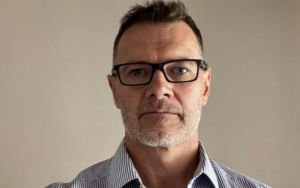
By Yewande Ayowole‑Oso, Talent Leader for Sub-Saharan Africa at Schneider Electric
By Yewande Ayowole‑Oso, Talent Leader for Sub-Saharan Africa at Schneider Electric
In a challenging economic climate, no organisation across Sub‑Saharan Africa is immune to shifting market pressures, fluctuating demand, and the realities of tough financial cycles. Business, after all, is cyclical marked by seasons of growth, reassessment, reinvention, and renewal.
Sub‑Saharan Africa’s economy is showing cautious resilience. The International Monetary Fund (IMF) projects regional GDP growth of around 4.0% in 2025, with modest pickup in 2026. This recovery is supported by reforms in key economies, infrastructure investment, and stabilisation efforts. Yet, structural constraints—including debt pressures, uneven commodity prospects, and global trade headwinds—continue to weigh on competitiveness.
This article explores how organisations can thrive—not just survive—by placing people at the heart of strategy, especially in Sub‑Saharan Africa’s emerging markets where economic uncertainty is compounded by social and structural challenge
Recognition in the face of adversity
Achieving Top Employer status in a time marked by economic uncertainty, political shifts, and global disruption is no small feat. It signals that Schneider Electric’s people strategy is not reactive—it’s resilient. While many organisations struggle to maintain stability, Schneider Electric continues to evolve, adapt, and lead with purpose.
The Top Employer certification is a globally recognised benchmark that validates an organisation’s excellence in people practices. It’s not based on perception or branding—it’s a fact-based, data-driven process that assesses how well an organisation supports its employees across key HR domains.
At Schneider Electric, this recognition is backed by strong metrics: 1st Top Employer Country Within Schneider Electric in Africa, scores above global average in 5 of 6 evaluation pillars, 100% scores in Business Strategy, Career, Ethics & Integrity, and Sustainability and 93–94% scores in Performance, Organisational Change, DEI, and Wellbeing.
This certification reflects more than just a badge; it’s proof that our people practices are built to withstand volatility and drive sustainable impact. The market is challenging, and all businesses are being forced to reassess how they operate. What defines a strong organisation is its ability to evolve—continuously resetting, adapting, and learning—while ensuring that people remain the anchor through every change.
Furthermore, this challenges a common misconception: that being a high-performing employer is synonymous with unbroken success or constant growth. In truth, it is the companies that confront adversity transparently, care for their people through transition, and keep evolving their people strategies that set the benchmark for excellence.
HR’s dual imperative
In this climate, HR leaders face two pertinent goals: to support workforce stability while enabling strategic agility. In South Africa, where youth unemployment and leadership pipeline gaps persist, HR leaders must adopt adaptive workforce models that position skills development, inclusion, and wellbeing as core drivers of organisational strategy—rather than peripheral support functions.
At Schneider Electric, this balance between business agility and human focus forms the cornerstone of how the company operates. The organisation continues to evolve in response to market realities, ensuring that its people strategy remains tightly aligned with business transformation.
Leadership in practice
Across industries, many leading organisations are navigating similar realities, which is why reorganisation, restructuring, and realignment are all part of maintaining relevance in an evolving market.
Human-centred leadership in practice goes beyond empathy—it’s a strategic discipline that integrates emotional intelligence, inclusive decision-making, and transparent communication into the core of business operations. In times of change, this leadership style ensures that employees are not passive recipients of decisions but active participants in shaping the future. It requires leaders to foster psychological safety, listen deeply, and respond with clarity and care.
At Schneider Electric, leadership behaviours are continuously evolving to match the pace of transformation. Every reset is treated not as a one-off event, but as a perpetual activity—anchored in trust, dignity, and shared purpose. The company’s people-first approach ensures that even as operations shift, its workforce remains informed, supported, and engaged.
Initiatives around leadership development, early-career acceleration, inclusion, and wellbeing continue to adapt in response to changing conditions, ensuring that the business remains agile without compromising its human foundation. Sustainability, in this context, is not just financial—it’s social and cultural too.
Conclusion: redefining resilience
Ultimately, thriving through uncertainty demands more than operational agility—it requires a human-centred mindset that evolves in lockstep with business transformation. In Africa’s dynamic and often unpredictable economic landscape, organisations that embed empathy, inclusion, and wellbeing into their core strategy won’t just survive disruption—they’ll redefine resilience.
And these are the companies that will shape the future of work, lead with purpose, and build legacies of sustainable impact.