Ruto: 2.7 Billion People Cannot Afford Healthy Diets Despite Global Food Production
President William Ruto says nearly 2.7 billion people globally cannot afford a healthy diet, urging governments to make nutritious food accessible alongside efforts to raise production.
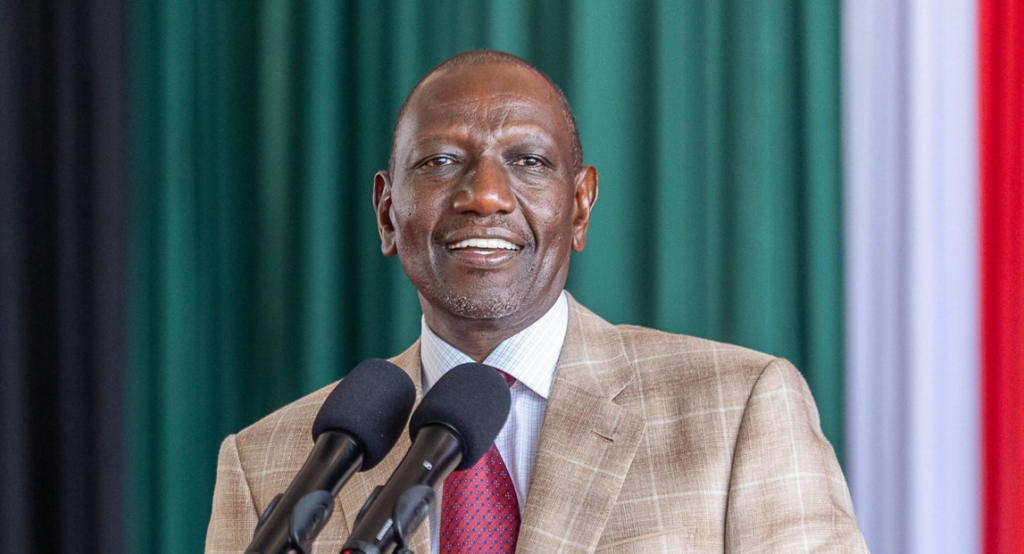
President William Ruto
President William Ruto has warned that nearly 2.7 billion people around the world cannot afford a healthy diet, saying the fight against hunger must go beyond increasing food production to ensuring households can access safe, nutritious and affordable meals.
Ruto said approximately two in every three people in Africa face the same challenge, despite the continent’s vast agricultural potential and the world producing enough food to feed everyone.
“The world already produces enough food to feed everyone. For decades, hunger has been driven less by absolute shortage than by the choices we make: what we fund, what we build, whom we protect and the opportunities we create,” he said.
The President was speaking on November 16 during the opening of the Third Global Parliamentary Summit Against Hunger and Malnutrition at Parliament Buildings in Nairobi.
He said food security should not be measured only by the amount of food produced, but also by whether people can obtain sufficient, safe, affordable and nutritious food.
“A child can eat every day and still be malnourished, because a full stomach and a nourished body are not the same thing,” Ruto said, urging governments to address access to nutritious diets alongside agricultural production.
Kenya still faces food insecurity
Ruto acknowledged that Kenya had not yet achieved food security, citing poor rainfall in arid and semi-arid areas as a continuing source of food shortages and acute malnutrition.
He said recent assessments had identified 2.7 million Kenyans facing crisis levels of food insecurity, while hundreds of thousands of children, pregnant women and breastfeeding mothers required nutritional support.
Malnutrition, he added, is estimated to cost the Kenyan economy 6.9 per cent of gross domestic product (GDP).
“We must therefore address production and nutrition together,” he said.
The President pointed to the government’s fertiliser subsidy programme as one of the measures aimed at raising agricultural output. He said more than 38 million bags of subsidised fertiliser had been delivered to nearly two million farmers since 2022, reducing the price of a 50-kilogramme bag from KSh7,500 to KSh2,000.
Ruto said maize production increased from 34.3 million bags in 2022 to 71 million bags in 2025, while maize imports declined substantially.
School meals linked to nutrition and farming
He also highlighted the school meals programme, which currently benefits approximately three million learners. The government intends to extend the programme to all 47 counties from 2027 and reach 10 million learners by 2030.
Ruto said the home-grown school feeding model connects children’s nutrition and school attendance with a reliable market for smallholder farmers.
He called on parliamentarians to translate commitments on food security into legislation, budgets and oversight, arguing that hunger is shaped by public policy choices.
“If hunger is shaped by public decisions, then ending it requires legislation, budgets and oversight. These are among the fundamental responsibilities of parliaments,” he said.
Kenya’s Constitution, under Article 43, guarantees every person the right to be free from hunger and to have adequate food of acceptable quality. Ruto urged lawmakers to ensure that such rights are backed by financing and practical delivery.
The Nairobi summit brought together parliamentarians and other stakeholders to discuss legislative and policy responses to hunger, malnutrition and the transformation of food systems.