Gladys Wanga Beats Waiguru to Emerge Kenya’s Most Influential Woman Leader
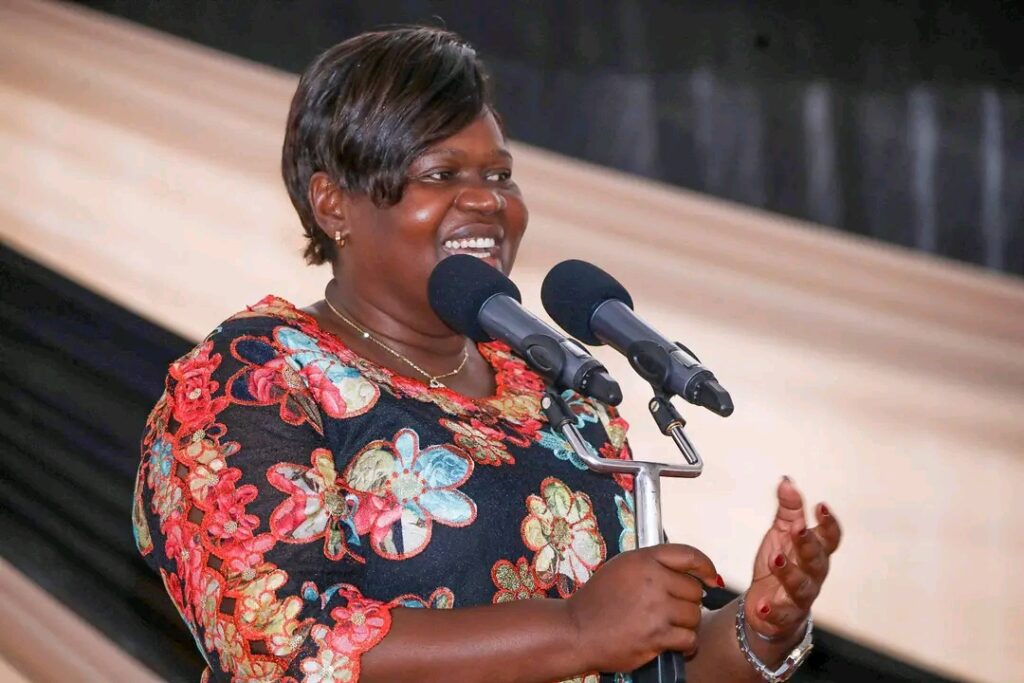
Homa Bay Governor Gladys Wanga has emerged as Kenya’s most influential woman leader in a national poll conducted by Mwelekeo Insights, narrowly edging her Kirinyaga counterpart Ann Waiguru in a closely contested race.
Wanga secured 40.3 per cent of the total responses, equivalent to 27,066 votes, against Waiguru’s 39.4 per cent, representing 26,482 responses.
The two governors were separated by just 584 responses, or 0.9 percentage points, in the November 2026 poll that attracted 67,220 participants.
Their combined score of 79.7 per cent demonstrated their dominance in the contest, with the remaining 19 women leaders sharing approximately 20.3 per cent of the responses.
The results place Wanga at the forefront of the national women’s leadership rankings, ahead of several prominent politicians, elected leaders and public figures.
Former Health Cabinet Secretary Susan Nakhumicha came a distant third with 2.0 per cent, equivalent to 1,319 responses, while Samburu West MP Naisula Lesuuda finished fourth with 1.7 per cent (1,157 responses).
Machakos Governor Wavinya Ndeti came fifth with 1.7 per cent, receiving 1,154 responses, while businesswoman Agnes Kagure completed the top six with 1.6 per cent (1,066 responses).
Other notable figures in the poll included Suba North MP Millie Odhiambo, who received 1.5 per cent, former Kitui Governor Charity Ngilu at 1.4 per cent and Catherine Omanyo at 1.3 per cent.
Faith Odhiambo, former Meru Governor Kawira Mwangaza and former presidential candidate Martha Karua each recorded 1.2 per cent.
The poll also featured Kwale Governor Fatuma Achani, Nakuru Governor Susan Kihika, Wangui Ngirici, Embu Governor Cecily Mbarire, former Nominated Senator Tabitha Karanja, Chief Justice Martha Koome, Nairobi Woman Representative Esther Passaris, Esther Muchemi and Beatrice Elachi.
Wanga’s victory comes as political leaders increasingly position themselves ahead of the 2027 General Election, with national visibility and public influence likely to feature prominently in conversations about the country’s political landscape.
The poll was conducted between November 18 and November 21, 2026, through an open online voting platform featuring 21 women leaders.
Mwelekeo Insights clarified that participation was voluntary and respondents were not selected through a probability-based sampling process.
The organisation cautioned that the findings should not be interpreted as a statistically representative reflection of the views of all Kenyans.
Instead, the results provide a snapshot of preferences among participants during the voting period and do not amount to a prediction of political outcomes in the 2027 General Election.