Ruaraka Land Saga: Institutional Record vs Political Narrative
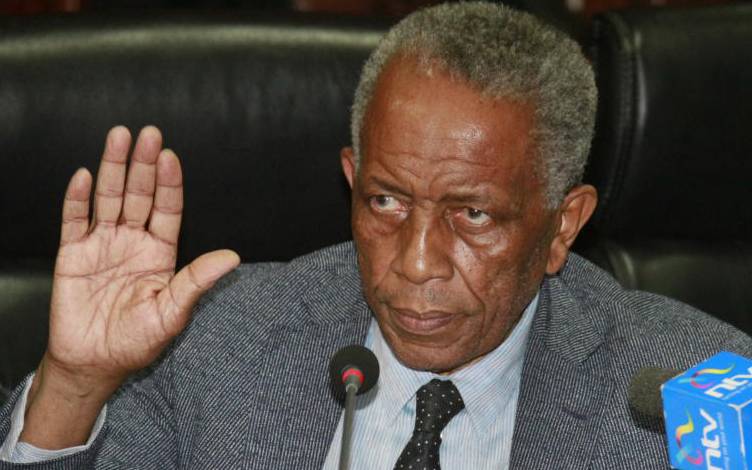
Tycoon Francis Mburu, adversely mentioned in the Ruaraka Land saga.
Few public controversies in recent years have generated as much political debate as the Ruaraka land saga. Yet beneath the headlines, accusations and campaign speeches lies a more complicated reality, one reflected in the official court record.
The dispute that has occupied courts, investigators and policymakers was never about a single individual. It involved multiple public institutions, statutory agencies and government offices, each playing a distinct role in a process that culminated in the payment of billions of shillings in compensation.
The Environment and Land Court reference and the subsequent appeal revolve around the actions of the National Land Commission, the Ministry of Education, the National Treasury, land administration agencies and other public bodies involved in the acquisition and compensation process. The courts examined questions of land ownership, compulsory acquisition, due diligence, valuation and the use of public funds.
Accountability in Government Is Rarely a One-Person Affair
Major government decisions do not originate from a single office. They pass through ministries, accounting officers, technical departments, legal advisers, oversight agencies and statutory approval processes.
The Ruaraka compensation process followed the same path.
The National Land Commission conducted the compulsory acquisition. Valuations were undertaken. Government agencies exchanged correspondence before public funds were processed and compensation paid. It was only afterwards that oversight bodies questioned both the legality of the acquisition and the payment.
The court proceedings reflect that institutional chain. They examine the conduct of public bodies exercising statutory mandates rather than the actions of one individual.
The Difference Between Legal Responsibility and Political Narratives
Public debate rarely follows the same path as legal proceedings.
Courts are guided by evidence, documents and statutory obligations. Politics is driven by personalities, messaging and public perception.
While the litigation concerns a network of institutions and private entities, much of the public discourse has increasingly centred on individual political figures instead of the broader decision-making framework.
This is not to suggest that public officials should be insulated from scrutiny. Rather, accountability is most credible when it reflects the complete institutional record.
What the Current Debate Leaves Out
One striking feature of the renewed debate is how little attention is paid to the broader governmental framework within which the disputed transactions occurred.
Complex institutional processes have increasingly been reduced to discussions about a handful of political personalities, even though the official record points to a much wider chain of decision making.
At the same time, the focus of investigations appears to be shifting.
As the Ethics and Anti Corruption Commission intensifies efforts to trace the compensation money, Senior Counsel Ahmednasir Abdullahi welcomed the move, posting on X:
“Right step in the right direction. Sue the lawyers who received the money… do proper tracing. Congratulations @EACCKenya.”
His remarks reflect the growing view that accountability should extend beyond the approval of compensation to everyone who benefited from the transaction.
PSs Belio Kipsang and Kamau Thugge: Missing From the Conversation?
The compensation process unfolded through multiple government offices, including the education and treasury sectors, each with statutory responsibilities in public finance and administration.
Yet recent public debate has largely revolved around Fred Matiang’i, while comparatively little attention has been directed at other senior officials who occupied key offices during the period, including former Treasury Principal Secretary Kamau Thugge and former Education Principal Secretary Belio Kipsang, both of whom continue to serve in senior public positions.
Whether this reflects political messaging, media framing or other factors is open to public debate. What is clear from the court record is that the dispute itself concerns institutional processes rather than the actions of a single office holder.
The Ruaraka Land Saga, Fred Matiang’i and 2027
The renewed political focus on the Ruaraka land saga comes at a time when Fred Matiang’i has emerged as one of the country’s leading opposition figures and a potential presidential candidate in the 2027 election.
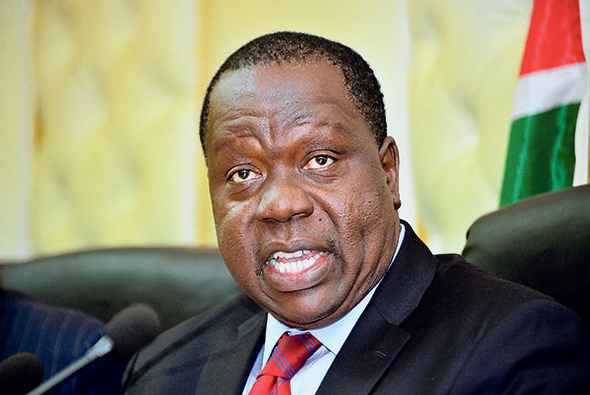
That timing has inevitably fuelled debate about whether politics is shaping public perceptions of the case.
Regardless of those differing views, one principle remains constant: public accountability is strongest when it follows the documentary record, applies consistently across institutions and individuals, and avoids reducing complex government decisions to the actions of a single public figure.