UN Chief Guterres Pushes for Expanded UN Presence in Nairobi
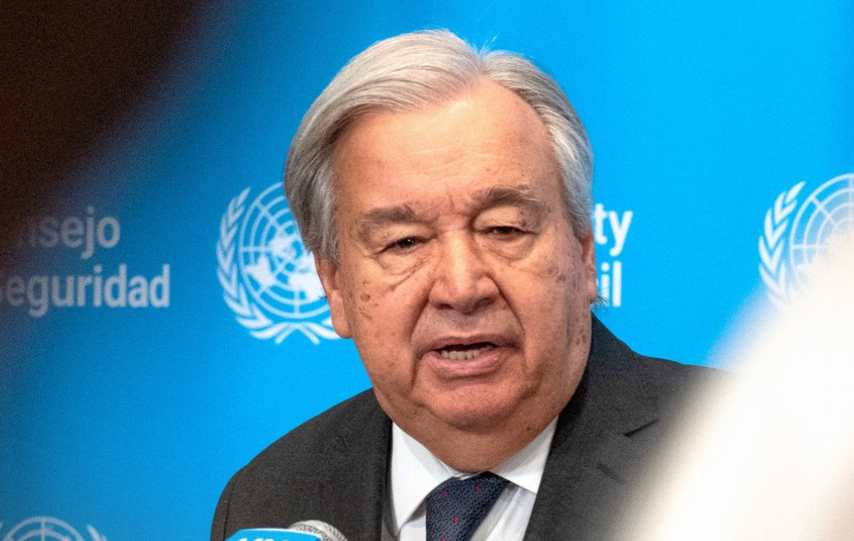
António Guterres
United Nations Secretary-General António Guterres has called for sweeping reforms to global governance institutions, stronger support for developing countries and urgent international action on conflicts including Sudan and Gaza.
Speaking on global inequality, security and multilateral cooperation, Guterres said the international system continues to disproportionately serve wealthy nations while underrepresenting Africa and other developing regions.
“You have three European countries as permanent members in the Security Council: France, UK, and Russia. You have no African country, no Latin American country,” he said.
“To have two African permanent members in the Security Council is essential to correct a historic injustice that comes from colonialism.”
The UN chief also criticised the structure of global financial institutions, arguing that developing nations remain sidelined in decision-making.
“If you look at the World Bank, IMF, or other international financial institutions, it is clear that developing countries are underrepresented, including African countries. This creates a situation in which the international financial architecture that we have serves the interests of the richest countries,” he said.
Guterres warned that declining humanitarian and development funding could worsen global instability, noting that many governments are prioritising military spending over social and economic support programmes.
“It is regrettable that a lot of official development assistance has been reduced and many other countries have given priority to defense and military expenditure than to humanitarian and development cooperation,” he said.
“There will be no peace and security if there is no development and if humanitarian problems are not properly addressed.”
On the ongoing war in Sudan, Guterres lamented what he described as limited global attention despite the scale of the humanitarian crisis.
“Unfortunately, since there is no big power directly impacted and no major economic interest at stake, Sudan tends to be forgotten. However, we are totally committed to fight for Sudan and end the war,” he said.
The Secretary-General also expressed concern over tensions involving Iran, Israel and the United States, warning that the ripple effects are being felt globally through rising energy costs and inflation.
“When I look at the situation in Gaza, it really breaks my heart,” he said.
“This crisis between Iran, the US, and Israel has consequences all over the world. Here in Kenya, you are paying the price.”
According to Guterres, countries such as Kenya are already experiencing economic pressure linked to the global energy market and inflation risks triggered by geopolitical instability.
The UN chief further revealed that the organisation is considering expanding its operational footprint in Nairobi as part of efforts to decentralise global governance institutions traditionally concentrated in Europe and North America.
“We have to recognize institutions that were created out of the Second World War were centred in the north,” he said.
“That is why my bet at the present moment is to have a possible reduction of what we have in New York or Geneva, where the prices are extremely high, and a strong bet in the expansion of Nairobi.”
He said the vision includes developing facilities in Nairobi capable of hosting sessions of the UN General Assembly and Security Council in the same way Geneva and New York currently do.
Despite mounting global crises, Guterres said he remains committed to pushing for justice, equality and international law for the remainder of his term.
“I am not hopeful, and I am not in despair; I am just determined to do everything I can until the end of my mandate,” he said.
“I am determined to do everything I can… in order to do my job, which is everything possible for justice, law, and equality to come back to our world.”